A Rainforest Regeneration Journey
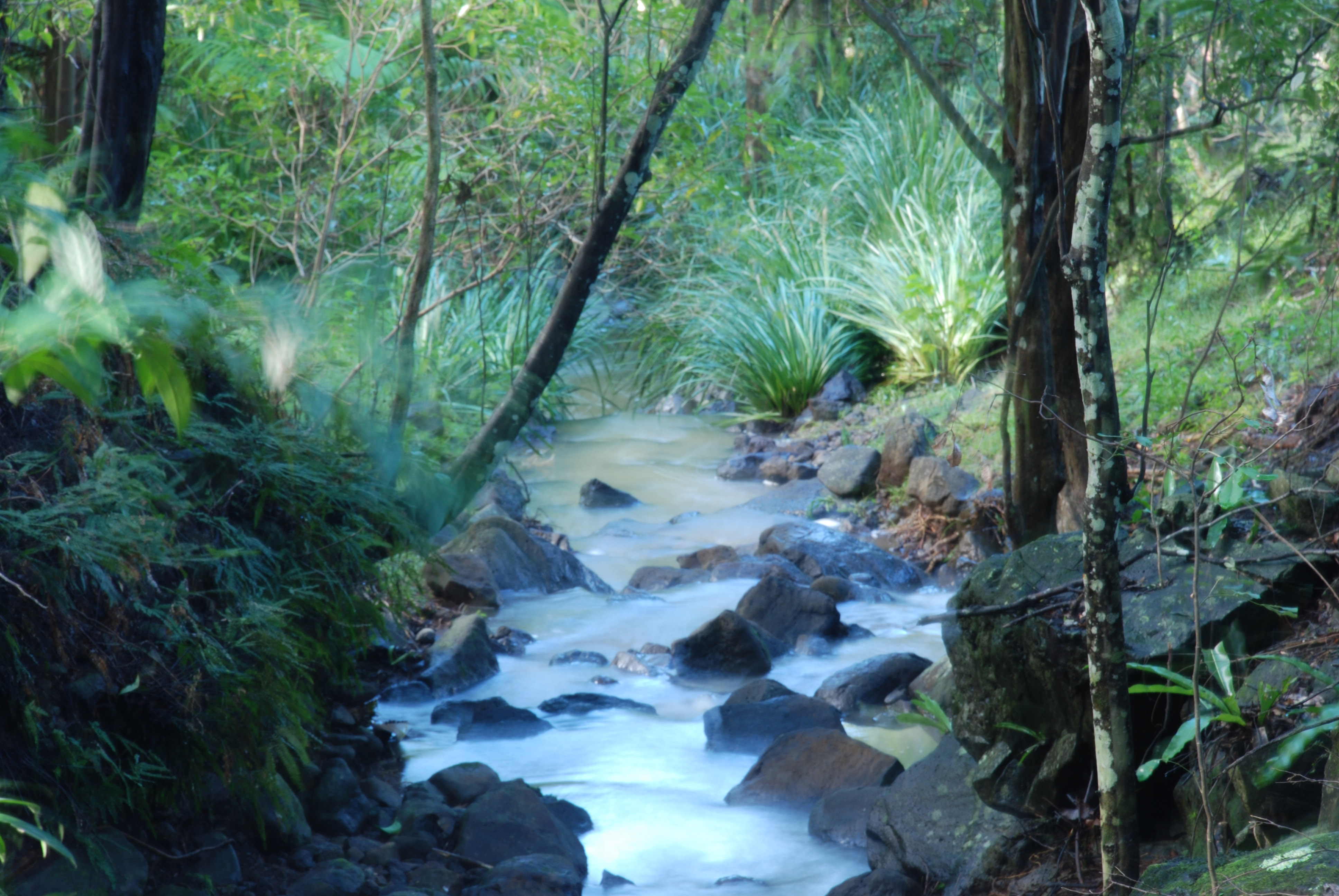
First I want to acknowledge and pay respect to the ancestors and descendants of the Nyangbul people of the Bundjalung Nation whose land this forest is on. I am mindful that the land always was and always will be Aboriginal Land.
Brief History
The basalt derived from ancient volcanoes in the area broke down to form the rich red soils and it was these soils and weather conditions that supported the growth of the Big Scrub Rainforest. The magnificent Big Scrub Rainforest was cleared by European settlers in the 19th Century resulting in less the 1% of the subtropical lowland rainforest remaining (Parkes et al., 2012). Aboriginal peoples of the Bundjalung Nation are deeply connected with the Big Scrub Rainforest and have been the traditional custodians for thousands of years (Gordon, 2017). The NSW government gave the land to white settlers who were encouraged to clear the land for agricultural purposes (Parkes et al., 2012). The clearing of this land as part of colonisation was devastating as it brought about massive physical and cultural change as Aboriginal peoples were “displaced and removed from their traditional lands” at the time (Parkes et al., 2012, p.212). The remnants of Big Scrub Rainforest were recognised in the late 20th Century as an ‘Endangered Ecological Community’ under the ‘NSW Threatened Species Conservation Act, 1995’ and ‘Lowland Rainforest of Subtropical Australia’ and as a Critically Endangered Ecological Community under the Federal Environmental Protection and Biodiversity Conservation Act 1999) (Parkes et al., 2012, p. 213).
A Degraded Remnant of the Big Scrub Rainforest

The picture above is the paddock in 1987 in an area where the Big Scrub Rainforest occurred prior to European settlement. It was degraded with weeds, and cattle were roaming through the small remnants of scattered rainforest trees. This land is on the edge of the red soils. When the land was fenced, preventing cows wandering through, and weeds were managed, the rainforest plants were able to regenerate. We planted local rainforest plant species to enhance the rainforest remnants.
30 Years Later

Seedlings of hoop pines (Araucaria cunninghamii) regenerate around the adult hoop pines. These ancient species are part of the Araucariaceae family of conifers that occurred in Gondwanan rainforests.
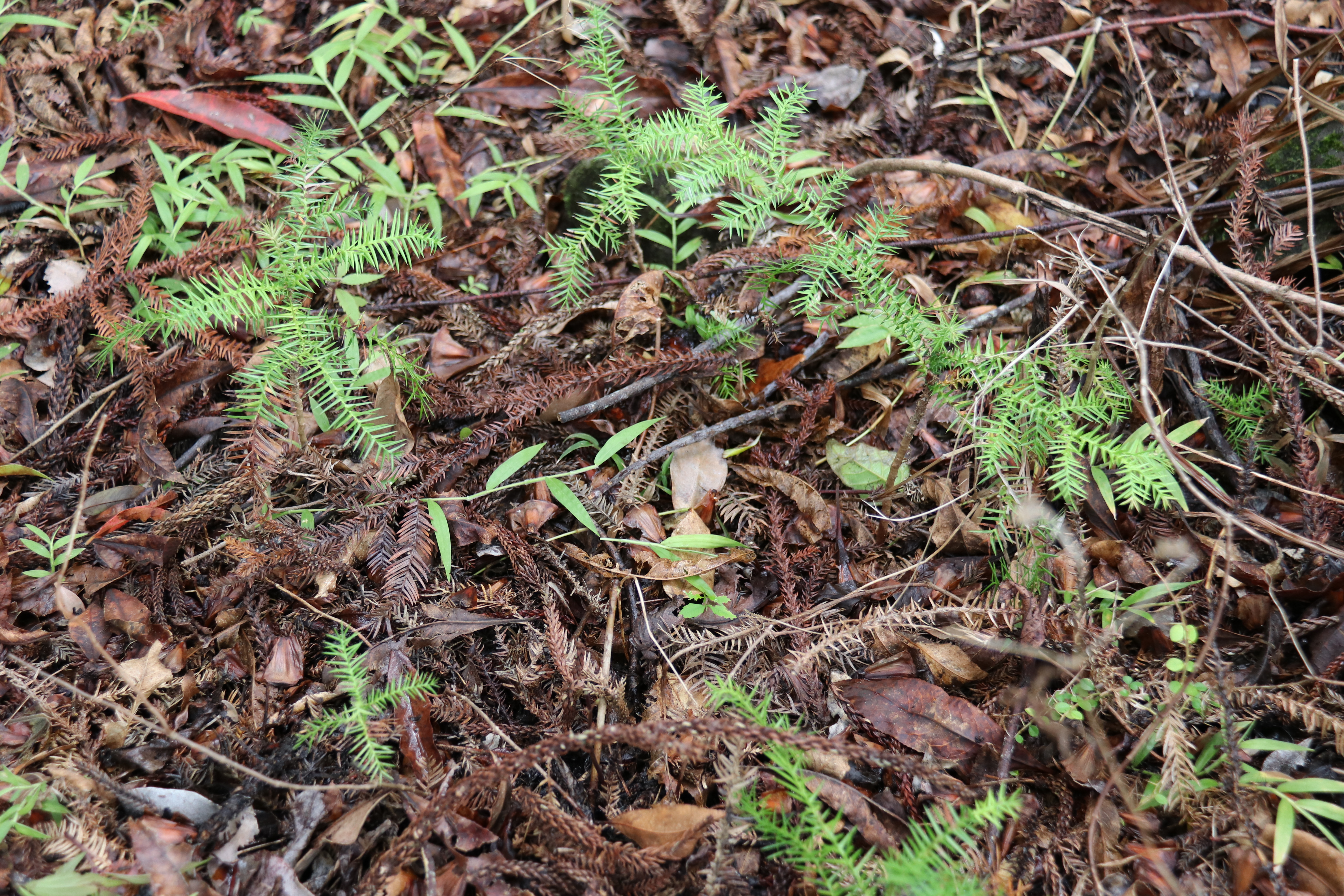
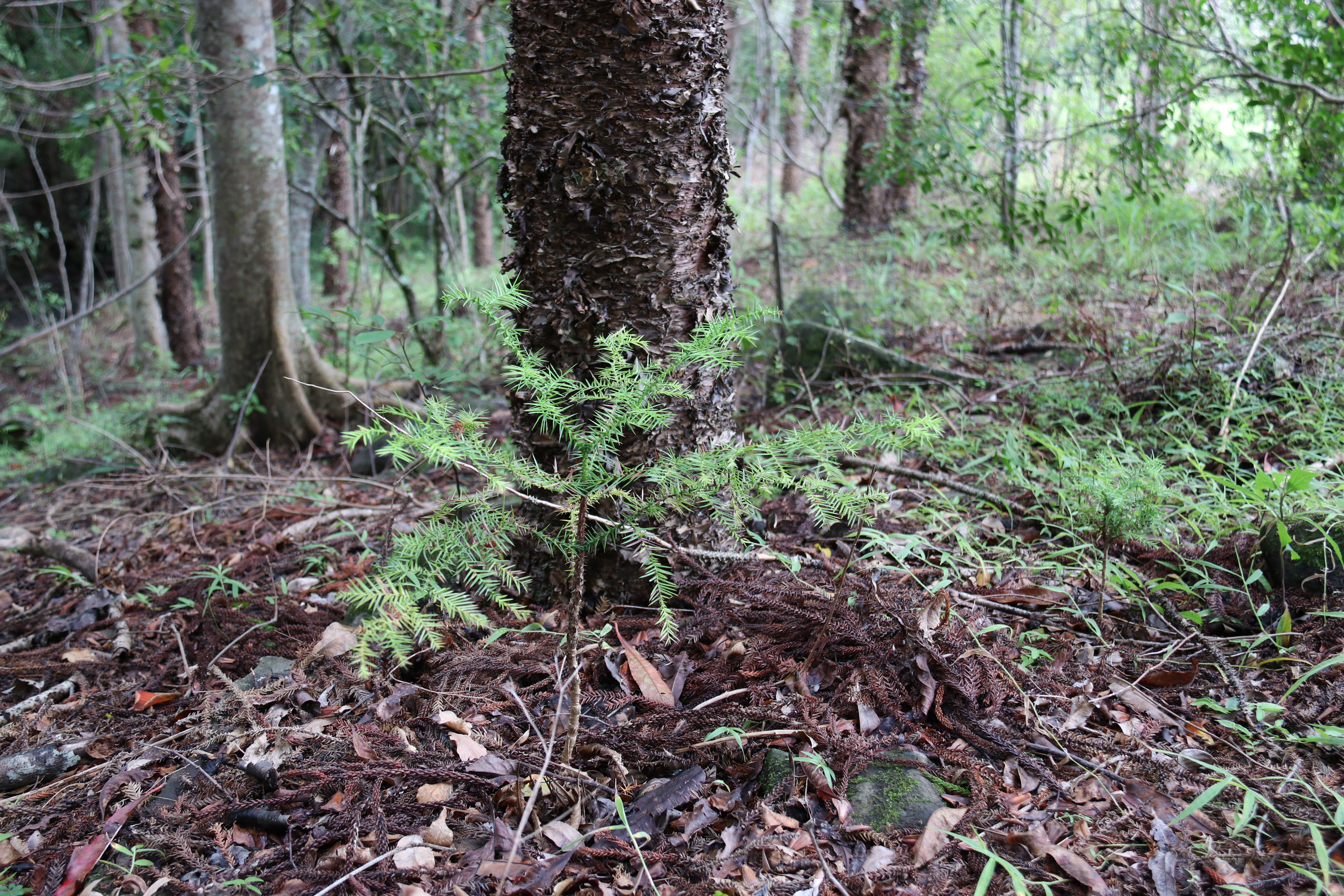

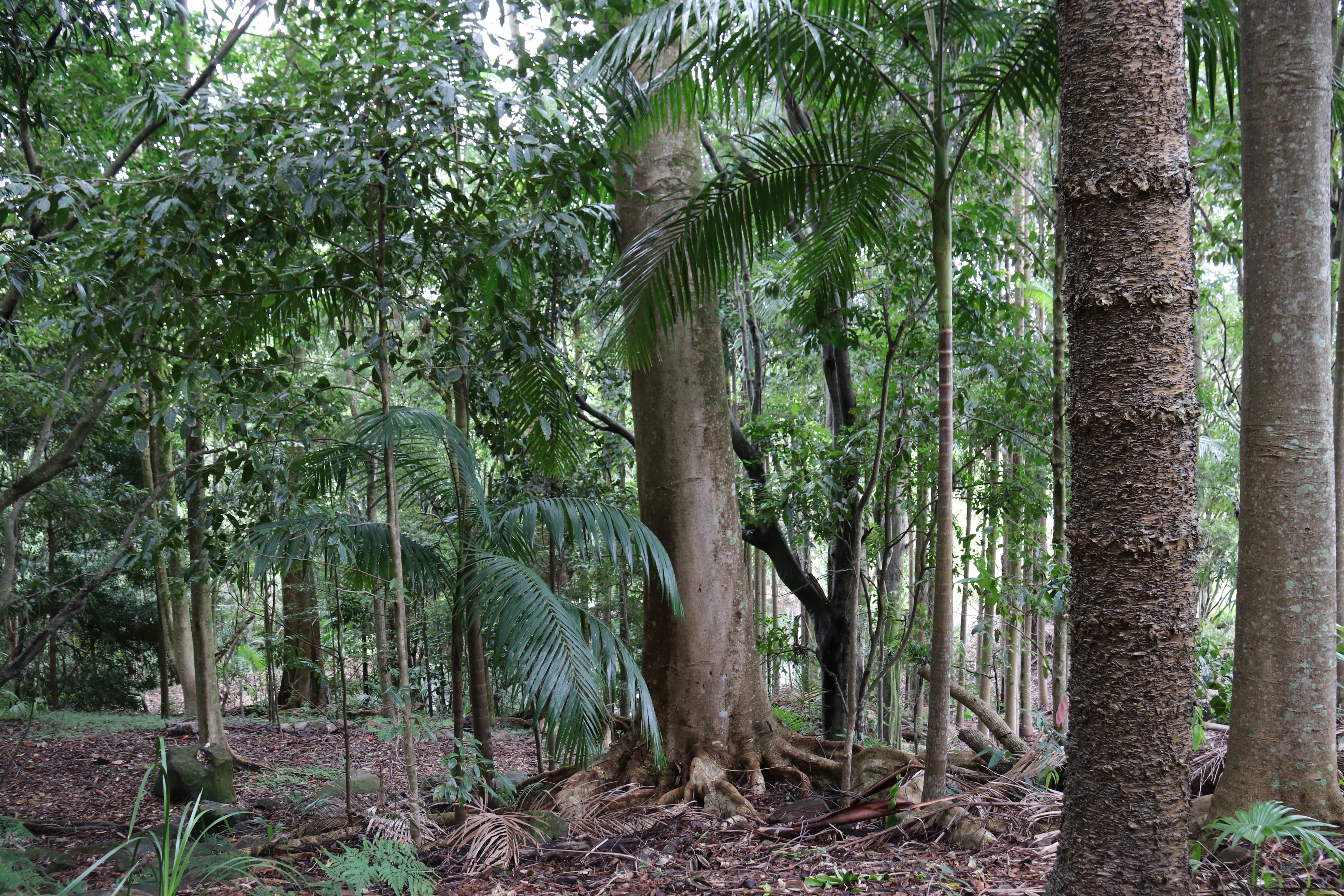 This was an open paddock where we built a chicken enclosure. Most of these trees were planted as tiny seedlings. Some of the trees regenerated in the middle of the chicken enclosure (which was moved to a different location).

This plant with its heart shaped leaves is called bleeding heart (Homalanthus populifolius) and is quick growing rainforest shrub.
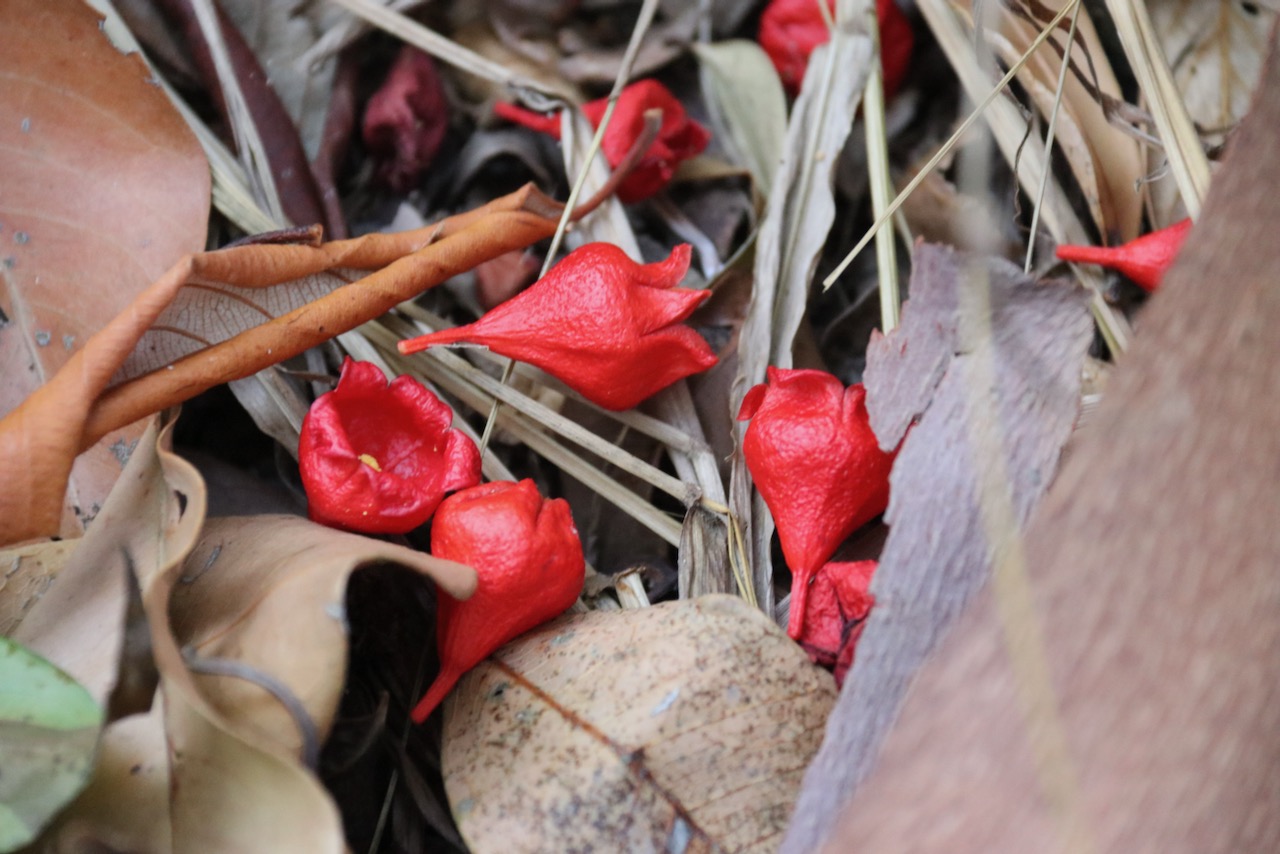
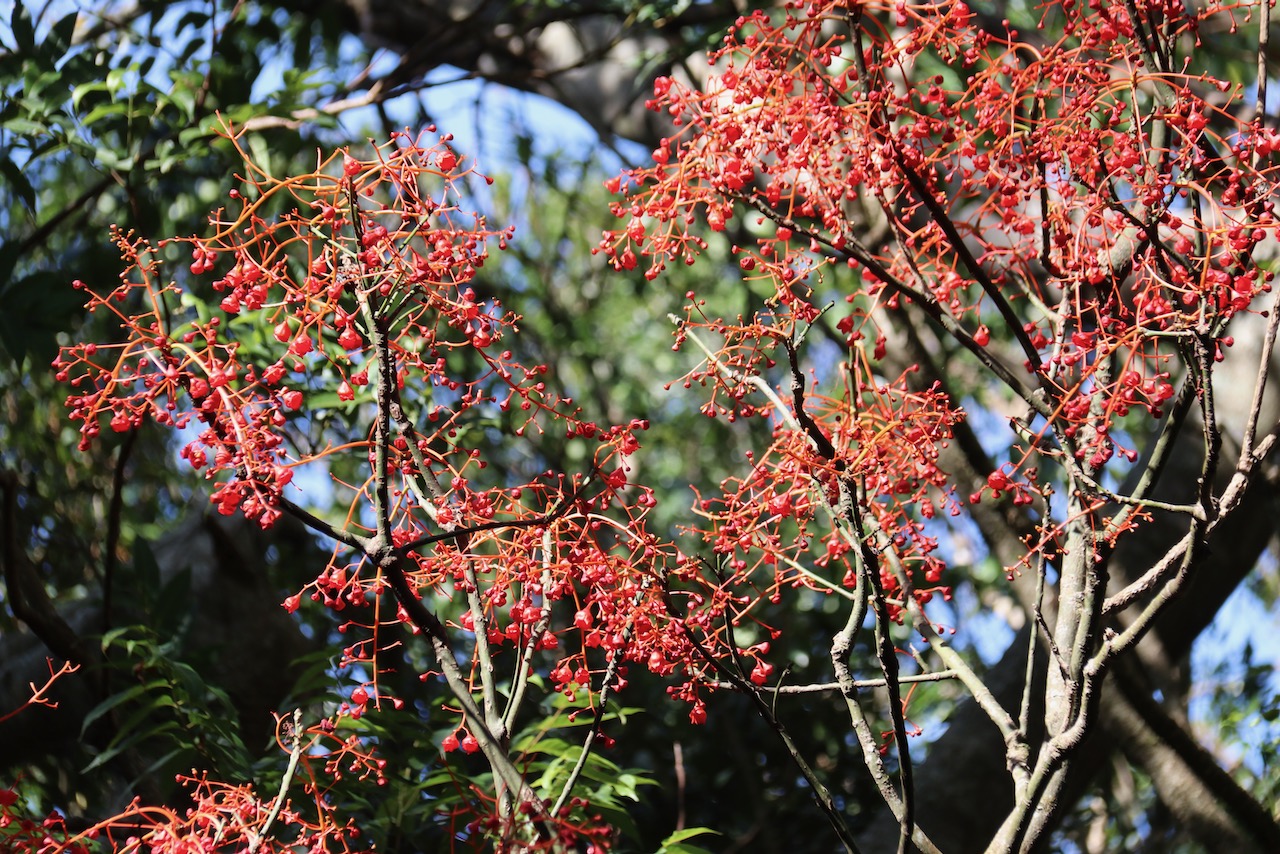
The bright red flowers of the flame tree (Brachychiton acerifolius).

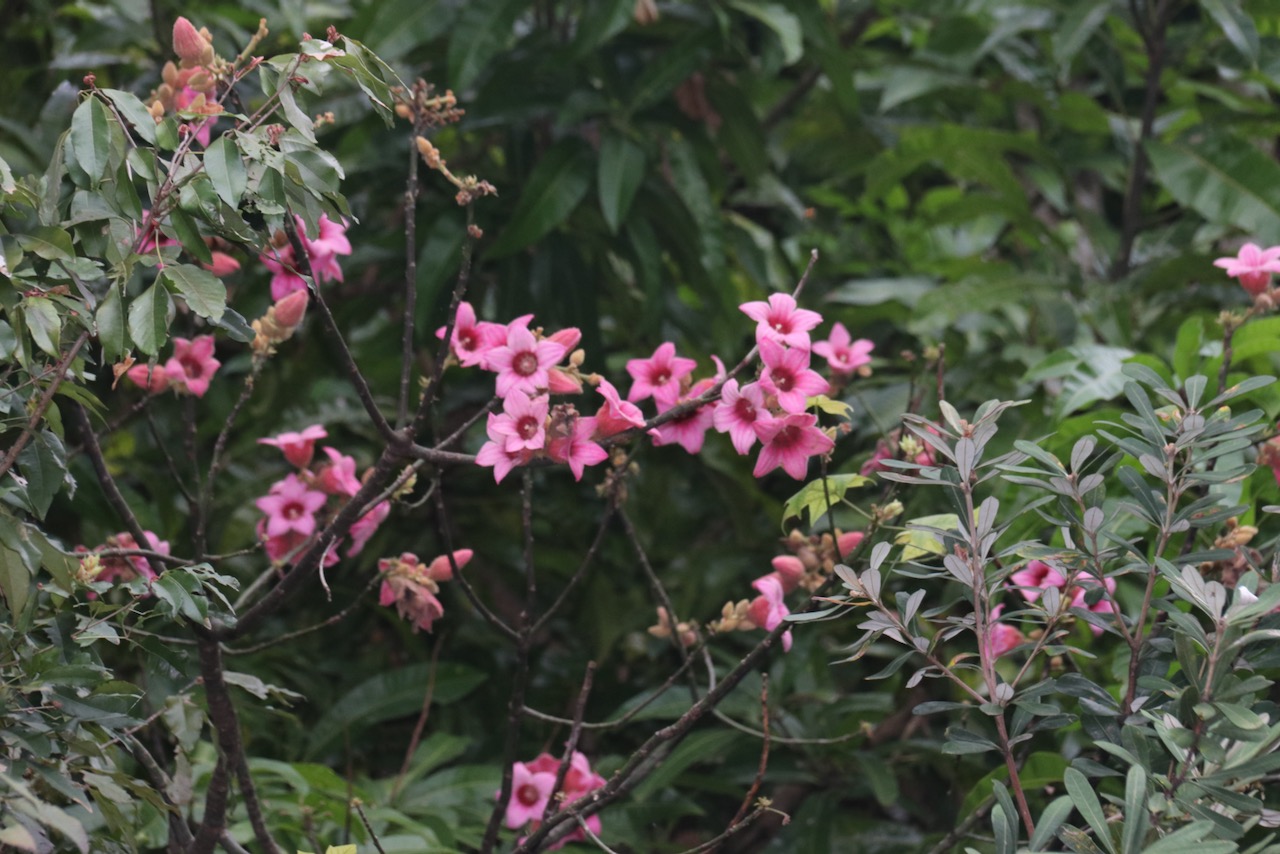
Another species of Brachychiton (Brachychiton discolor), the lacebark tree (above and below), with its bright pink flower.

The blackbean tree (Castanospermum australe) has a colourful flower and a pod with very large seeds.

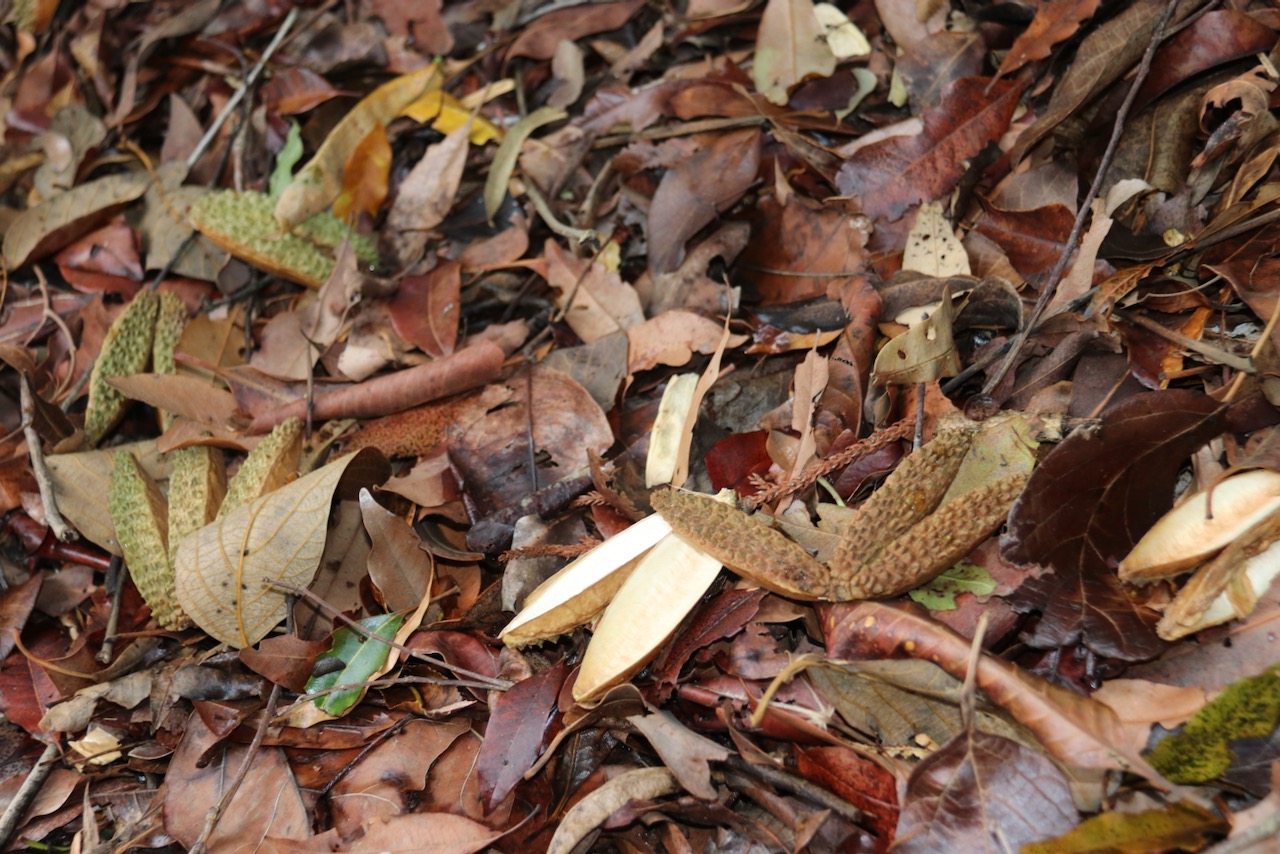
The woody seedpods of the cudgerie tree (Flindersia schottiana) (below) contain winged seeds which twirl in the wind and spread around the forest.
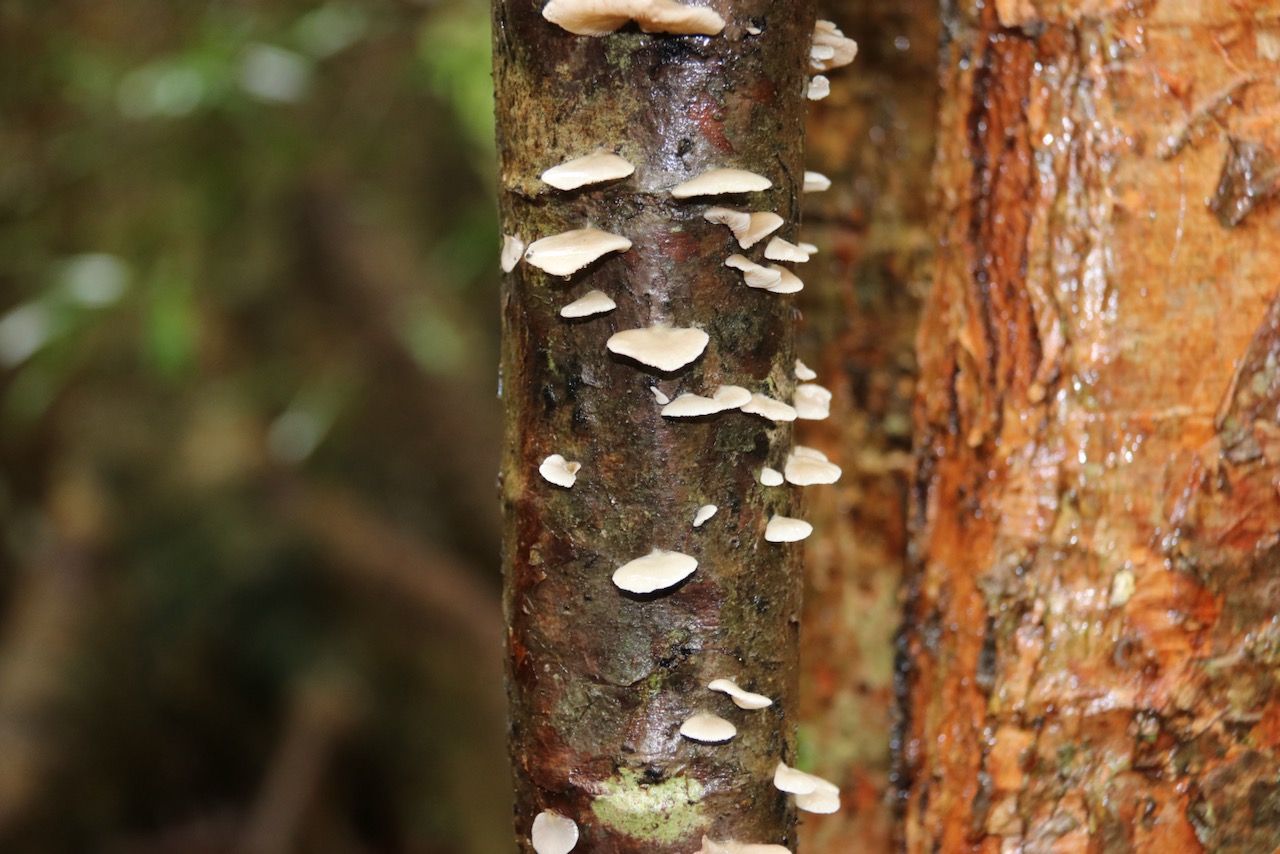
As old trees start to die fungi grows through the trunk breaking down the tree and recycling the nutrients. You can see the fruiting bodies of the fungus on the outside of the tree.
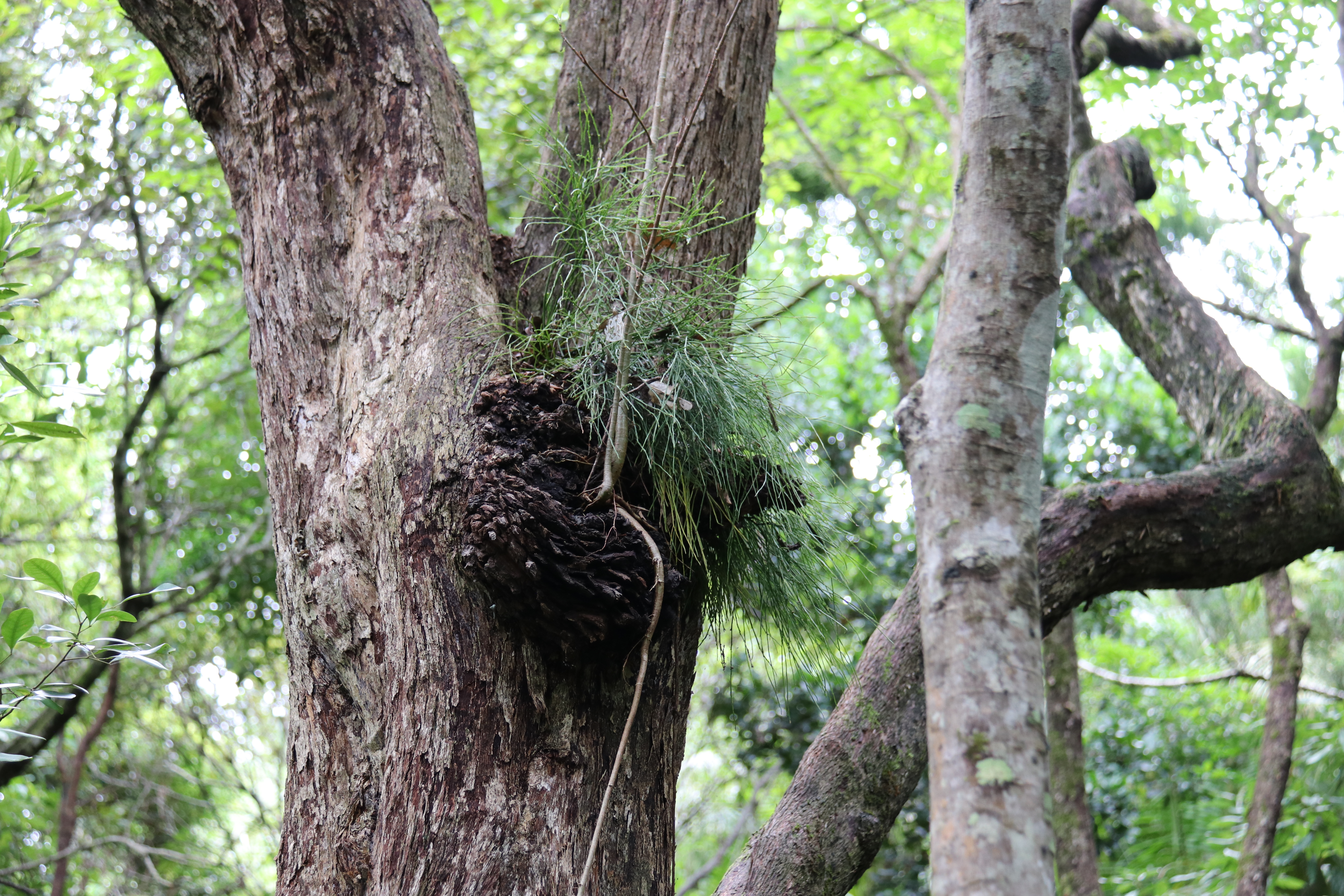
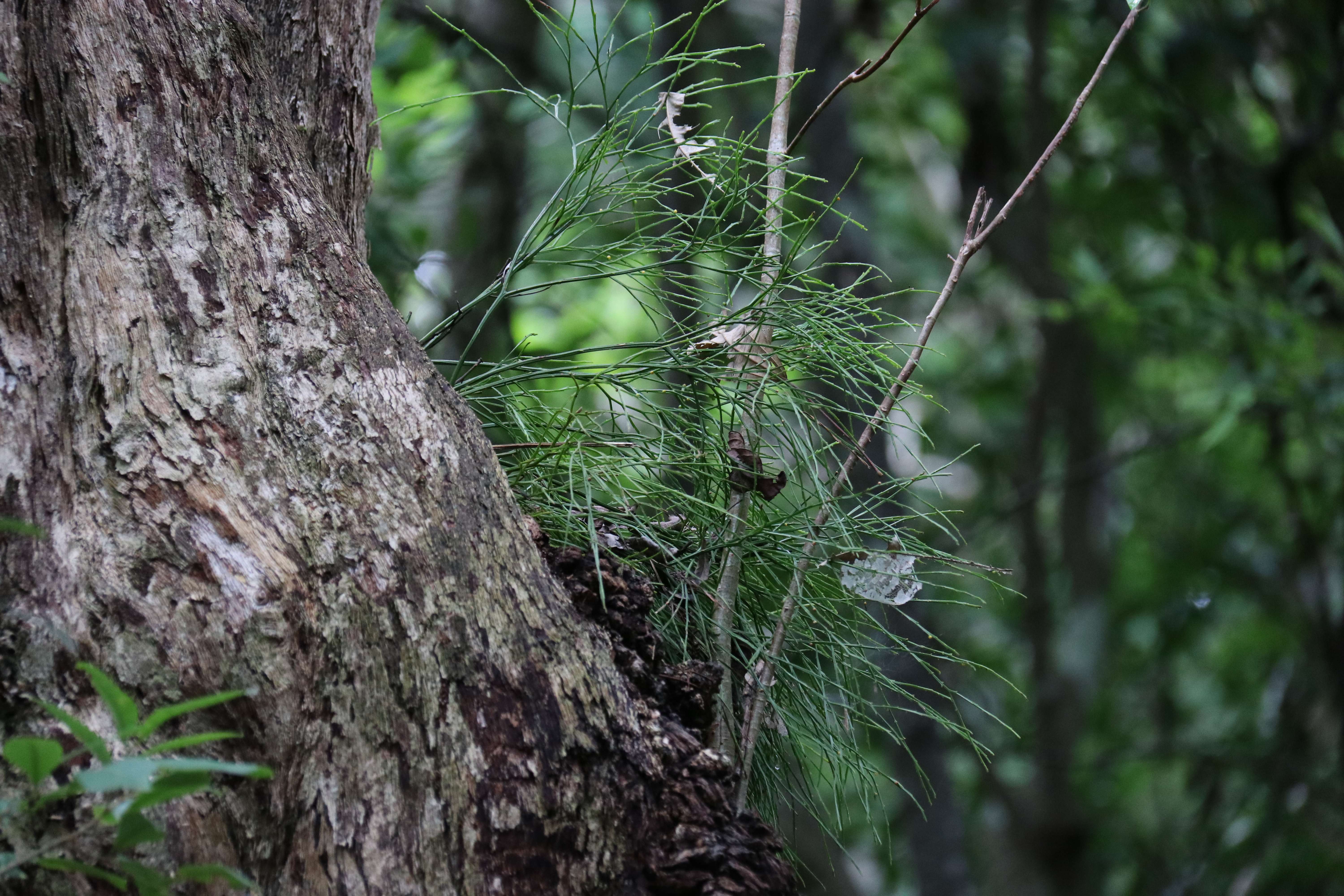
The plant in our forest growing out of the trunk of the tree below is an ancient fern like plant (Psilotum). It is very similar in structure to some of the first land plants that colonised land. A very simple seedless plant with no leaves or roots.

This six word essay tells the story of my tree companion over the COVID-19 lockdown.
References:
Gordon, R. (2017). Guriabu… A very, very, long time ago. In S. Baunach- Greenfields (Ed.), The Big Scrub Rainforest a journey through time (pp. 25–30). Lismore, NSW/Bangalow, NSW: Rous County Council/Big Scrub Landcare.
Parkes, T., Delaney, M., Dunphy, M., Woodford, R., Bower, H., Bower, S., et al. (2012). Big scrub: A cleared landscape in transition back to forest? Ecological Management and Restoration, 13(3), 212–223. https://doi.org/10.1111/emr. 12008
wwwwww
 Marianne Logan's site